


The correct way to brew roasted rice tea: postpartum mothers need to pay attention to everything from water temperature and quantity to storage.
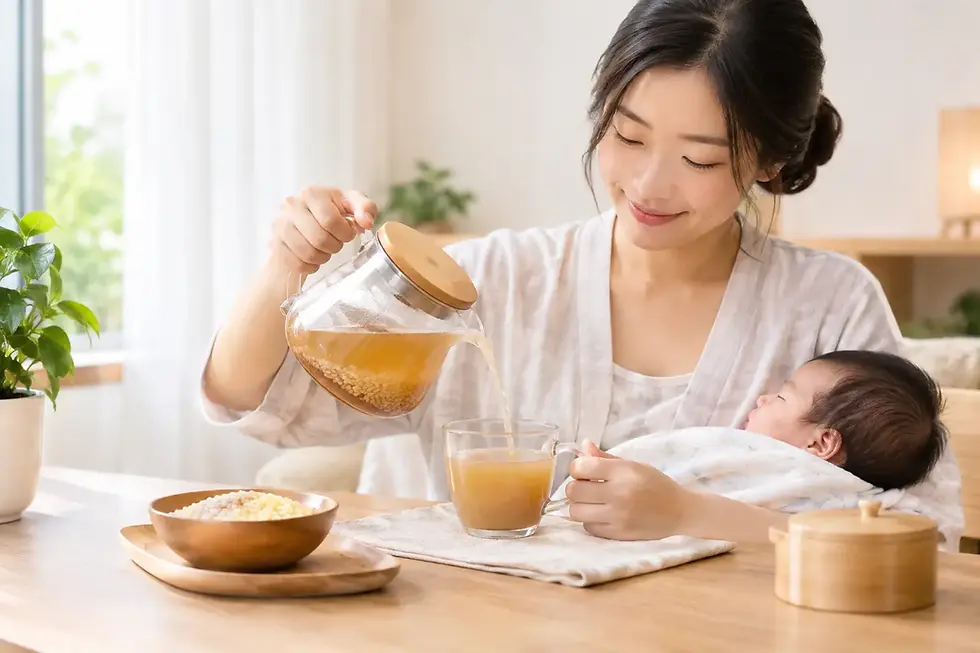
Immediately after childbirth, family members often offer a cup of warm roasted rice tea. While seemingly simple, it often goes to two extremes: either it's too weak, tasting like lukewarm water, or it's too strong and left out for too long, resulting in a bitter taste. The key to properly brewing roasted rice tea isn't about soaking the rice for as long as possible, but rather about ensuring the aroma, temperature, and daily serving size are tailored to the new mother's immediate recovery needs.
Fried rice tea is a common warm drink served during postpartum confinement in Hong Kong. The fragrant fried rice, steeped in hot water, has a mild flavor, suitable for mothers who don't want cold drinks but still want to increase their intake of warm fluids. However, the method should not be generalized for those who have had a vaginal delivery, a cesarean section, are breastfeeding, or are prone to dry mouth, bloating, or constipation. Following the basic methods correctly and then adjusting according to your body's response is the safest way to nourish your body at home.
The correct way to brew roasted rice tea is to first master the ratio of rice to water.
If using pre-fried rice, it is recommended to start with about one to two tablespoons of fried rice in 500 to 700 ml of hot water each time. For first-time users or postpartum mothers with sensitive stomachs, start with one tablespoon, observe the taste and body's reaction, and then adjust accordingly. Adding more fried rice does not necessarily mean better results; on the contrary, it may make the tea too strong, dry, and more likely to feel cloying if consumed throughout the day.
The ideal water temperature is hot water that has just boiled and cooled slightly, around 85 to 95°C. If the water temperature is too low, the aroma of the rice will not be easily released; steeping directly in boiling water for a long time may make the flavor too strong. Put the roasted rice into a thermos or covered teapot, pour in hot water, cover and steep for 15 to 20 minutes, until the tea turns a light golden color and you can smell the natural aroma of rice, then it is ready to drink.
If you use a thermos at home, you don't need to open the lid and stir frequently. Letting the fried rice soak quietly usually results in a cleaner flavor. If you are using a cup, it is recommended to rinse it briefly with a small amount of hot water and then discard it before adding the hot water you intend to drink, especially for fried rice that has been opened and stored for a while, to reduce surface debris affecting the taste.
How many times can one pot be refilled?
Generally, the same batch of roasted rice can be brewed once or twice. The first brew should be steeped for 15 to 20 minutes, and the second brew can be extended to 20 to 30 minutes. If the third brew is already noticeably tasteless, there is no need to force it to continue brewing. Rather than repeatedly adding water and making the tea weaker and weaker, it is better to brew a small pot as needed, which makes it easier to control the freshness and strength of the tea.
If you add ginger slices, red dates, or other medicinal herbs to your roasted rice tea, the steeping time and amount will need to be adjusted accordingly. Especially in the early postpartum period, during recovery from a cesarean section , or while undergoing treatment with a traditional Chinese medicine practitioner, it is not recommended to mix multiple ingredients together for brewing. Each ingredient has its own properties and is best suited for specific times; simple roasted rice tea doesn't necessarily need additional ingredients to be considered nourishing.
How should a new mother arrange her daily diet?
Roasted rice tea can be a warm drink during the day, but it doesn't need to completely replace all other beverages. A more practical approach is to prepare a pot in the morning and drink it slowly in several portions between breakfast and evening, avoiding gulping down large amounts of hot drinks at once. Small sips are more comfortable when you've just finished breastfeeding, feel thirsty, or need rest; however, it's not advisable to drink too much before bed to avoid frequent trips to the toilet during the night, which could disrupt your already fragmented rest.
The amount of water consumed depends on the mother's appetite, sweating level, breastfeeding schedule, and medical advice. Breastfeeding mothers need to pay attention to whether they are adequately hydrated, but they don't need to force themselves to drink excessive amounts of water in an attempt to increase milk supply. Milk production is affected by breastfeeding frequency , latching position, rest, nutrition, and individual condition. Roasted rice tea is a daily warm drink and not a single method to guarantee increased milk production.
If a mother who has given birth vaginally finds her energy and appetite gradually returning, she can brew the tea a little stronger, depending on her taste. Mothers who have had a cesarean section should pay closer attention to their bowel movements, wound healing, and defecation. If they experience bloating, nausea, significant dry mouth, worsening constipation, or discomfort after drinking the tea, they should dilute the concentration and, if necessary, stop drinking it and consult a medical professional or a registered Chinese medicine practitioner. Postpartum care requires a phased approach; not all nourishing drinks are suitable for large-scale consumption starting from day one.
If not stored properly, roasted rice tea can easily turn from fragrant to bitter.
Roasted rice tea is best consumed immediately after brewing. It's recommended to finish the tea in a thermos on the same day. If left for more than half a day, especially if the lid is repeatedly opened, new water is added, or the room is well-heated, the aroma will diminish and the taste will easily become cloudy. It's not advisable to save brewed roasted rice for the next day, and it's even more inadvisable to reheat overnight tea and drink it as fresh tea.
Uncooked roasted rice should be stored in a dry, airtight, and dark place to prevent it from getting damp in the refrigerator or absorbing odors from other foods. Use a dry spoon to scoop out the rice each time you take some; do not put a wet spoon directly into the container. If you find that the roasted rice has an oily smell, a musty smell, has become damp and clumped together, or is abnormally dark in color, you should discard it and not continue to use it out of reluctance.
Which common practices are actually not suitable?
Many families boil roasted rice for half an hour, believing that this will bring out its full flavor. However, if the roasted rice is evenly roasted and has a sufficient aroma, boiling it will already bring out a mild rice fragrance. Boiling for a long time may not be more suitable for daily drinking, and it may also make the tea too strong, and make cleaning the pot more troublesome.
Another common situation is that mothers feel the roasted rice tea isn't sweet enough, so they add a lot of sugar or honey. It's understandable that postpartum women want something smooth to drink, but sweetness can easily mask the body's true thirst and also add extra sugar. To improve the taste, try reducing the amount, shortening the steeping time, or drinking it after meals; this usually reduces the astringency.
For mothers who are sensitive to caffeine, are taking medication, have a history of gestational diabetes, or have kidney or gastrointestinal problems, postpartum diets should be tailored to individual needs. While roasted rice tea is made from everyday ingredients, it doesn't mean everyone can drink it without restriction. When your body is sending out uncomfortable signals, the most important thing isn't to force yourself to stick to traditional methods, but to seek professional help to find a rhythm that suits you.
In Canada, there may not be elders to provide daily care during postpartum recovery. However, a pot of perfectly brewed roasted rice tea can still serve as a small reminder to drink water slowly and rest on time. MoonyMama's care for postpartum mothers emphasizes these seemingly minor arrangements that actually impact daily recovery. Let the warm aroma of rice linger in your daily routine, allowing you to dedicate more time to rest and cuddling your baby.


Comments